
After a tree is removed, the stump is normally left in the ground unless you arrange to deal with it. You can leave it to rot, dig it out, or grind it below ground level. Grinding is the most common choice in Hamilton and the Waikato because it is quick and leaves the ground ready to reuse.
A standard tree removal takes the trunk and branches away, but the stump and its root plate stay put, cut close to ground level.
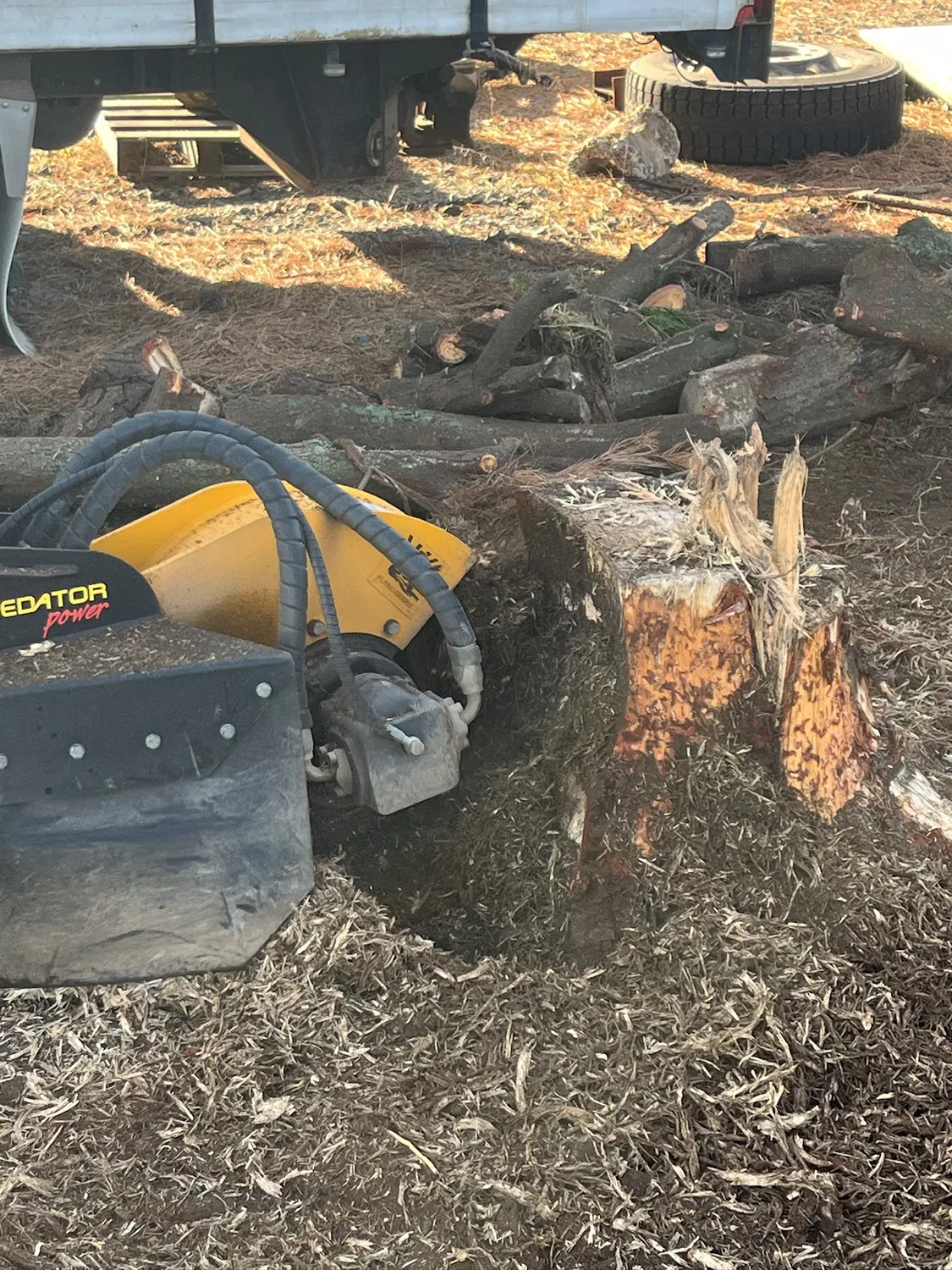
Why is the stump left behind after tree removal?
Taking a tree down and removing a stump are two different jobs, done with different gear. Felling and dismantling is climbing, cutting and rigging work. Grinding out a stump needs a dedicated stump grinder, a machine with a rotating cutting wheel that chews the wood away. Because the two tasks use separate equipment and time, stump grinding is normally quoted as a separate line from the tree removal itself. If you want the stump gone, say so when you book, so it is priced in from the start rather than as an afterthought.
A stump cut low and left in place is not just untidy. It creates a set of ongoing problems that tend to get worse, not better, over time.
What are your options for dealing with a tree stump?
There are three practical ways to handle a stump once the tree is down. The right one depends on where the stump sits, what you want to do with the space, and the size of the root system.
Leave it to rot down naturally
Doing nothing is free, but slow. A large hardwood stump can take many years to break down, and while it does it becomes a home for wood-boring insects and decay fungi. Some, such as harore, the New Zealand honey fungus, feed on dead stumps and roots and can spread through the ground to nearby living trees. A live stump can also throw up suckers or regrowth from the roots. If the stump is in a back corner of a rural block where nobody walks and nothing is being built, leaving it may be fine. On a lawn, near a path, or anywhere you want to use, it rarely is.
Dig the stump out
Digging or pulling a stump out with machinery removes the whole root plate, which suits sites where you need clean, root-free ground, for a building platform or deep services. It is more invasive: it leaves a large hole to backfill and compact, and it disturbs a much bigger area than grinding. On a full site clearance, digging stumps can be folded into the wider earthworks, which we cover in our guide to clearing a Waikato section.
Grind the stump below ground level
Grinding is the most common choice for residential and lifestyle properties. The grinder reduces the stump to chips, working down below grade so nothing is left showing. It is faster and far less disruptive than digging, and it lets you reinstate the ground straight away.
Why grind a stump out?
Grinding solves several problems in one go:
- Trip and mowing hazard. A low stump is easy to catch a foot, a mower or a wheelbarrow on. Grinding takes it below the surface so the ground is clear.
- Pests and fungi. A decaying stump harbours wood-boring insects and fungal growth that you would rather not have sitting in the garden.
- Regrowth and suckering. Some species push up new shoots from a live stump and roots. Grinding out the stump and main root crown stops that regrowth.
- Reclaiming the space. Once the stump is gone you can lay lawn, put down paving, plant a garden, prepare a building spot, or run a new fence line through where the tree once stood.
How does stump grinding work, and what does it leave behind?
The grinder's cutting wheel works across and down through the stump, taking it below ground level, typically low enough to lay turf or topsoil over the top. It does not pull the deep roots out; it removes the stump and the upper root crown, which is what matters for regrowth and for using the surface.
What is left is a pile of grindings, a mix of woodchip and soil that sits in and around the hole. You can:
- backfill the hole with the grindings and top with soil, then seed or turf over it, or
- barrow the grindings away and bring in clean topsoil if you are laying a lawn or planting straight over the spot.
Grindings make a reasonable mulch for garden beds, though they are lower in nutrients while they break down, so keep them off vegetable beds and away from the base of new plantings.
Stump grinding vs full stump removal
| Factor | Stump grinding | Digging it out |
|---|---|---|
| Ground disturbance | Low, localised to the stump | High, large hole and wide area |
| Deep roots | Left in ground to rot | Root plate removed |
| Speed and mess | Fast, mostly grindings | Slower, spoil to cart away |
| Best for | Lawns, gardens, new fences, paving | Building platforms, deep services |
| Reinstating the ground | Backfill and turf straight away | Backfill, compact, then reinstate |
For most jobs, grinding gives you a usable surface faster and with less mess. Digging earns its place when you genuinely need root-free ground at depth.
Planning what comes next
The reason people grind a stump usually points to what happens on that spot afterwards. If a new fence or landscaping is going where the tree was, grinding clears the line so posts can go in cleanly. If you are pricing a bigger job, our guide to how much tree removal costs in Hamilton and the Waikato explains why stump work is quoted as a separate add-on rather than bundled into a single flat figure.
Frequently asked questions
01Is stump grinding included in the price of tree removal?
No. Tree removal and stump grinding are separate jobs done with different equipment, so grinding is quoted separately. If you want the stump gone as well as the tree, ask for it to be included when you get your quote so it is priced from the start.
02How far down does a stump grinder go?
A grinder takes the stump below ground level, generally low enough to lay topsoil and turf over the top. It removes the stump and the upper root crown rather than pulling out the full deep root system, which is enough to stop regrowth and reuse the surface.
03Will the tree grow back if I only grind the stump?
Grinding out the stump and root crown removes the growing point that most species regrow from, so it stops suckering and regrowth in the great majority of cases. A stump left whole in the ground is far more likely to throw up new shoots.
04Can I build, pave or lay lawn where the stump was?
For lawn, paving and planting, grinding and backfilling is usually all you need. If you are putting in a building platform or deep services and need root-free ground at depth, digging the stump and root plate out is the better option, and that is best planned alongside any earthworks.
05What happens to the woodchip left behind?
The grindings can be backfilled into the hole and topped with soil, or carted away so you can bring in clean topsoil. They also work as a rough garden mulch, though they are best kept off vegetable beds while they break down.
We remove trees and grind the stumps out cleanly, then leave the ground ready for lawn, paving or a new fence.
See our stump grinding service or get in touch for a free quote, or call 021 024 76217.
About Woodney Contracting. Family-run arborists, fencing contractors and earthworks operators serving Hamilton, Cambridge and the greater Waikato for 5 years. Fully insured, rated 5.0 from 14 Google reviews. Get in touch or call 021 024 76217.