
For most deciduous trees in the Waikato, the best time to prune is late winter while they are dormant, before spring growth. Prune spring-flowering trees just after they flower, avoid heavy cuts during the spring flush, and remove dead or dangerous limbs at any time. Species, growth stage and your reason for pruning all matter.
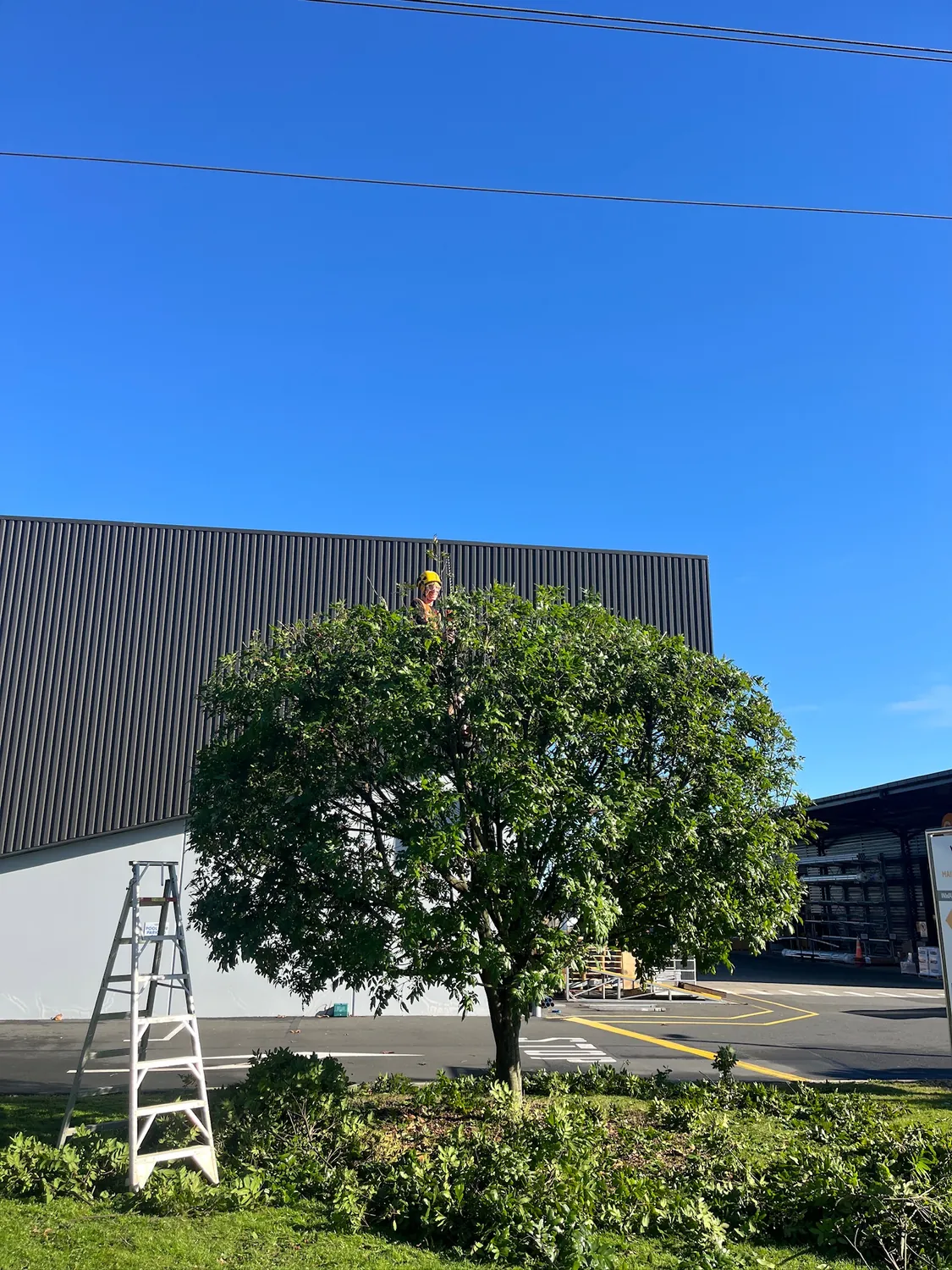
There is no single date that suits every tree, and anyone who gives you one is oversimplifying. A pear tree, a native, a fruit tree, and a fast-growing shade tree all have different ideal windows. What follows is how to think about it, and how we approach timing on Waikato properties.
Why timing matters
Pruning is a wound. When and how you make the cut affects how well the tree seals it, how it responds with new growth, and how exposed it is to disease. Prune at the right time and the tree recovers cleanly and grows the way you want. Prune at the wrong time and you can trigger a flush of weak growth, remove next season's flowers before they open, or leave a fresh cut open when disease pressure is high.
Two principles matter more than the calendar. First, how much you take. Te Uru Rākau's arboriculture guidance, Canopy, sets out the general rule we work to: remove no more than about one-third of the green crown at a time, and prune early and often rather than in occasional heavy hits. Second, why you are pruning, because clearing a dangerous limb, shaping a young tree, and tidying a flowering ornamental all call for different timing.
Pruning by season in the Waikato
| Season | Good for | Be careful with |
|---|---|---|
| Late winter (dormant) | Most deciduous trees, structural and reduction pruning, fruit trees | Very early winter cuts in prolonged wet spells |
| Spring | Pruning spring-flowering trees just after they finish flowering | Heavy pruning during the new growth flush |
| Summer | Light shaping, clearance, slowing over-vigorous growth | Removing too much green in the heat, stressing the tree |
| Autumn | Light tidying; planning for winter work | Major cuts as many trees wind down for the season |
| Any time | Dead, damaged, diseased, or dangerous limbs | Nothing; safety comes first |
Late winter dormancy
For most deciduous trees, the dormant period in late winter is the prime window. The tree is not actively growing, the structure is easy to read with the leaves off, and it is poised to seal cuts and push healthy growth when spring arrives. This is the usual time for structural pruning, crown reduction, and shaping fruit trees.
Spring flush
As trees leaf out in spring, they are putting a lot of energy into new growth. Heavy pruning in the middle of that flush is generally a poor move, since you are removing the fresh growth the tree just invested in and can leave it stressed. Light work is fine; big cuts are better held over.
Spring-flowering trees
If a tree flowers in spring, it usually sets those flower buds the previous season. Prune it hard in winter and you cut off the coming display. The rule of thumb is to prune spring-flowering trees soon after they finish flowering, so they have the rest of the season to set buds for next year.
Dead, damaged, and dangerous limbs
There is one exception that overrides the calendar entirely. Dead, broken, diseased, or hazardous branches can and should be removed whenever you find them. Waiting for the "right" season on a limb that could drop makes no sense. If a limb is a genuine hazard, treat it as urgent.
A note on the Waikato's humid conditions
The Waikato is warm and humid through much of the year, and that matters for pruning. Damp conditions favour the fungi and bacteria that get into fresh pruning wounds. That is another reason to prune when conditions are on your side, make clean cuts with sharp gear, and avoid leaving large wounds during the wettest, most disease-prone stretches. For certain species prone to specific diseases, timing the cuts to drier periods is part of doing the job well rather than just doing it fast.
This is where knowing the species pays off. The dormant-season rule is a solid default, but some trees have their own quirks, and a certified arborist matches the timing to the tree in front of them. If you are weighing up whether a tree needs pruning at all or has reached the point of removal, our guide to tree pruning versus tree removal walks through that decision.
Frequently asked questions
01When is the best time to prune trees in the Waikato?
For most deciduous trees, late winter during dormancy is the best window, before the spring growth flush. Spring-flowering trees are best pruned just after they finish flowering, and dead or dangerous limbs can be removed at any time. The ideal timing depends on the species and the reason for pruning.
02Can you prune trees in summer?
Yes, for light work. Summer suits shaping, clearance, and slowing an over-vigorous tree. Avoid removing large amounts of green in the heat, since that stresses the tree. Keep within about one-third of the crown at any one time.
03Is it bad to prune a tree in spring?
Heavy pruning during the spring growth flush is generally best avoided, because the tree has just put its energy into new growth. Light pruning is fine, and spring-flowering trees should be pruned right after they flower. Save major structural cuts for the dormant season.
04How much can I safely prune off a tree at once?
As a general principle, remove no more than about one-third of the green crown at any one time, and prune little and often rather than in occasional heavy cuts. Taking off too much at once stresses the tree and can trigger weak regrowth.
05When should I prune fruit trees in the Waikato?
Most fruit trees are pruned in the dormant season, in late winter, which encourages healthy growth and good fruiting for the coming season. Some stone fruit are pruned in summer to reduce disease risk, so it pays to match the timing to the specific tree.
Want your trees pruned at the right time, the right way, and within safe limits? We prune to suit the species and the season across Hamilton and the wider Waikato.
See our tree trimming and pruning service, get in touch for a free quote, or call 021 024 76217.
About Woodney Contracting. Family-run arborists, fencing contractors and earthworks operators serving Hamilton, Cambridge and the greater Waikato for 5 years. Fully insured, rated 5.0 from 14 Google reviews. Get in touch or call 021 024 76217.