Prune a tree when it is basically healthy and the problem is selected branches, such as overhanging limbs, deadwood or a crowded crown. Remove it when it is structurally unsound, badly diseased, dead, or simply the wrong tree in the wrong place. Prune to keep a good tree healthy; remove when the tree itself is the problem.
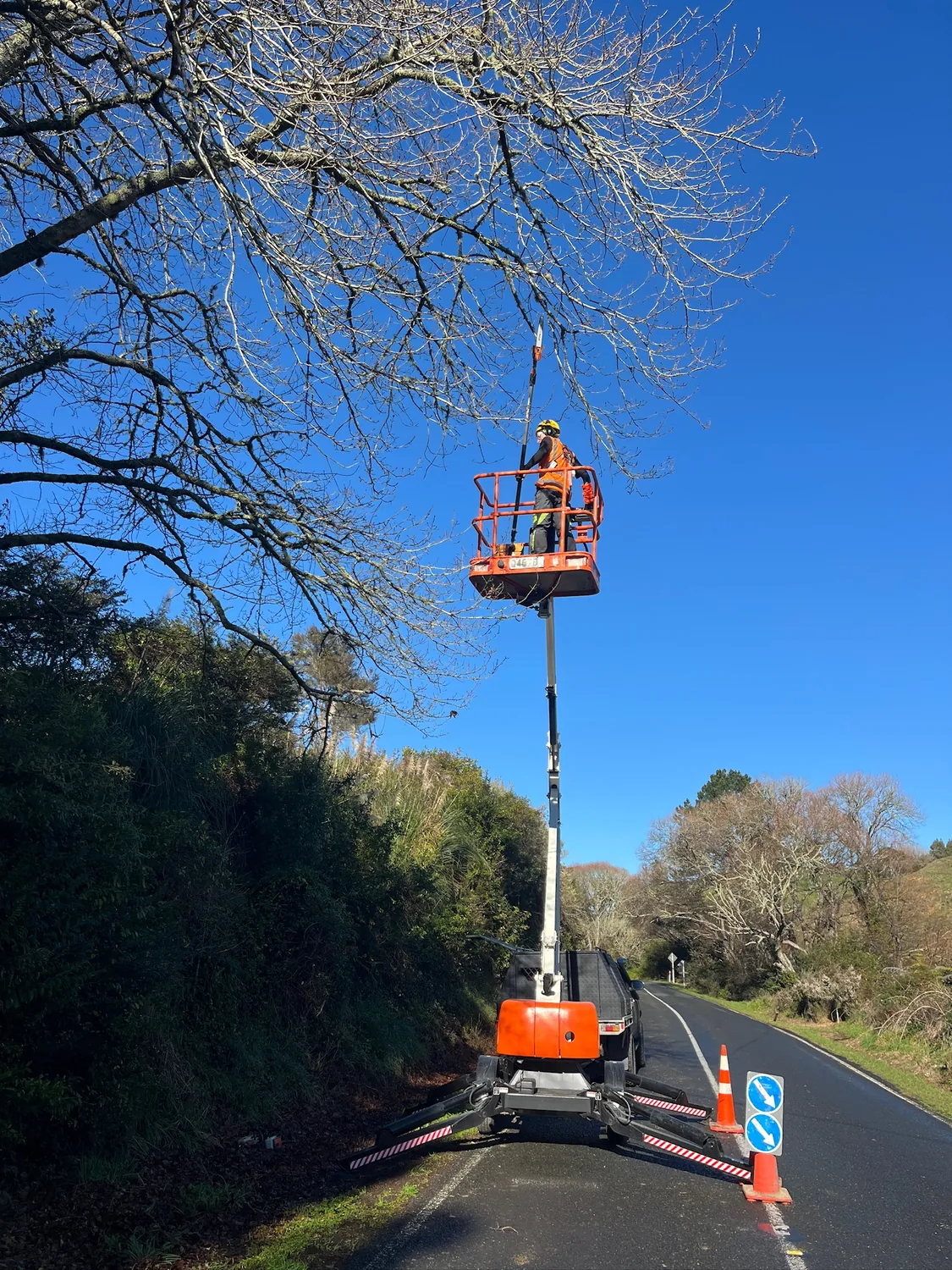
Most people asking this question have a specific worry: a tree touching the house, dropping branches, blocking light, or looking a bit rough after a storm. The honest answer is that many of those situations are pruning jobs, not removals. A tree is a long-term asset on your property, so the goal is usually to keep it if it can be kept safely. The exceptions are real though, and getting that call wrong either wastes money or leaves a hazard standing.
When pruning is the right answer
Pruning solves a surprising number of tree problems while keeping the tree in the ground. If the trunk and root system are sound and the canopy is healthy, targeted pruning is almost always the better option.
Common jobs that pruning handles well:
- Crown thinning to let more light and wind through a dense canopy, easing the load on branches and reducing shade over the house or lawn.
- Crown reduction to bring a tree that has outgrown its space back to a sensible size without topping it.
- Deadwooding, removing dead or dying branches so they do not drop unexpectedly.
- Clearance pruning to lift branches off a roof, gutters, driveway, fence line, or footpath.
- Shaping and formative pruning on younger trees so they grow with strong structure.
The key with all of these is restraint. A tree makes its food through its leaves, so cutting off too much green at once stresses it and can trigger a mess of weak regrowth. Te Uru Rākau's arboriculture guidance, Canopy, sets out the general principle we work to: remove no more than about one-third of the green crown at any one time. If a tree needs more taken off than that to fix the problem, it usually needs a plan across a couple of seasons, or it is a sign the tree may not be the right fit for the spot.
Done properly, pruning improves safety, clears space, and often makes a tree look better while it keeps doing its job. If you want the detail on when in the year to do it, see our guide to the best time to prune trees in the Waikato.
When removal is the better call
Some trees are past the point where pruning helps. Removal is the safer and more practical choice when the problem is the tree itself rather than a few branches.
Structural failure
Large cracks in the trunk, splitting at a major fork, a hollow or rotten core, or roots lifting out of the ground point to a tree that could fail. Pruning a few limbs does not fix a compromised trunk or root plate.
Disease or serious decline
Widespread dieback across the canopy, bracket fungi at the base, or a tree that is clearly on the way out year after year is often better removed, both for safety and to protect other trees nearby.
Wrong tree, wrong place
A fast-growing or large species planted too close to the house, drains, or the boundary will keep causing problems no matter how often it is cut back. At some point repeat pruning costs more than removal and replacement with something suited to the space.
Repeated problems
If you are calling someone back every year to deal with the same tree dropping limbs or blocking the same gutter, removal may be the more economical long-term answer.
For a fuller checklist of the danger signs, read our article on the warning signs a tree needs removing. When a tree is genuinely unstable, treat it as urgent and keep people and vehicles clear until it is assessed.
Prune or remove: a quick comparison
| Situation | Usual answer | Why |
|---|---|---|
| Overhanging or low branches on a healthy tree | Prune | Clearance pruning fixes it and keeps the tree |
| Dense canopy, too much shade, wind sail | Prune | Crown thinning or reduction eases the load |
| A few dead branches on a sound tree | Prune | Deadwooding removes the hazard only |
| Cracked trunk, hollow, or lifting roots | Remove | Structural failure cannot be pruned away |
| Widespread dieback or serious disease | Remove | Tree is declining and a risk to others |
| Large tree too close to the house or drains | Often remove | Repeat pruning will not solve the root cause |
| Same problem every single year | Consider removal | Long-term cost usually favours it |
Why a certified arborist should make the call
The gap between "needs a prune" and "needs to come out" is not always obvious from the ground. A hollow can be hidden, a lean can be old and stable or new and dangerous, and a tired-looking tree can bounce back with the right pruning. A certified arborist reads those signs, weighs the risk, and recommends the least drastic option that actually solves the problem. That is the whole point of an assessment: to avoid removing a tree that could have been saved, and to avoid pruning one that should come down.
It is also worth knowing that some trees are protected. Hamilton City Council protects "notable trees" listed in its District Plan, and you generally need resource consent to remove or prune those, as set out on the Council's trees page. Street and park trees are the Council's to manage too. For ordinary private trees the Council does not get involved, but it pays to check before major work if your tree might be a notable one.
Frequently asked questions
01Is it cheaper to prune or remove a tree?
Pruning is usually cheaper than removal for a single job, because you are dealing with selected branches rather than taking down and disposing of the whole tree. Over many years though, repeatedly pruning a tree that is in the wrong place can cost more than removing it once. The right comparison is the long-term cost, not just this visit.
02Can heavy pruning save a dying tree?
Sometimes, but not always. If the decline is caused by root damage, disease, or structural failure, pruning will not reverse it. Removing dead and damaged wood can help a stressed tree recover, but a certified arborist needs to assess whether the tree is worth keeping first.
03Will pruning make my tree grow back thicker?
Light, correct pruning encourages healthy, balanced growth. Cutting too hard, or topping a tree, tends to produce a flush of weak, crowded regrowth that is more of a problem later. Keeping within about one-third of the crown at a time is the safe guide.
04How do I know if my tree is protected in Hamilton?
Protected or "notable" trees are listed in the Hamilton City Council District Plan. If your tree is significant or you are unsure, check with the Council before pruning or removing it, since consent may be required.
Not sure whether your tree needs a trim or needs to go? We will give you a straight assessment and the least drastic option that actually fixes the problem.
See our tree trimming and pruning service or, if it is beyond saving, our tree removal service, get in touch for a free quote, or call 021 024 76217.
About Woodney Contracting. Family-run arborists, fencing contractors and earthworks operators serving Hamilton, Cambridge and the greater Waikato for 5 years. Fully insured, rated 5.0 from 14 Google reviews. Get in touch or call 021 024 76217.